Ir al contenido
Scaling up flexibility and diversification
 In 2010 Red TERRAE (Network of AgroEcological Reserve Territories) was born as a partnership of different Spanish Municipalities, mainly rural. Since then, TERRAE has built on the previous experience, focusing on local connections with restaurants and retailers. It has developed more flexible contract conditions regarding time engagement, price and volume. The TERRAE method and brand emerge as a system of contracts between local Municipalities, restaurants or other consumers, as well as landowners and unemployed people in order to custody both the territory and the agro-landscapes by enhancing agricultural biodiversity and self-employment.
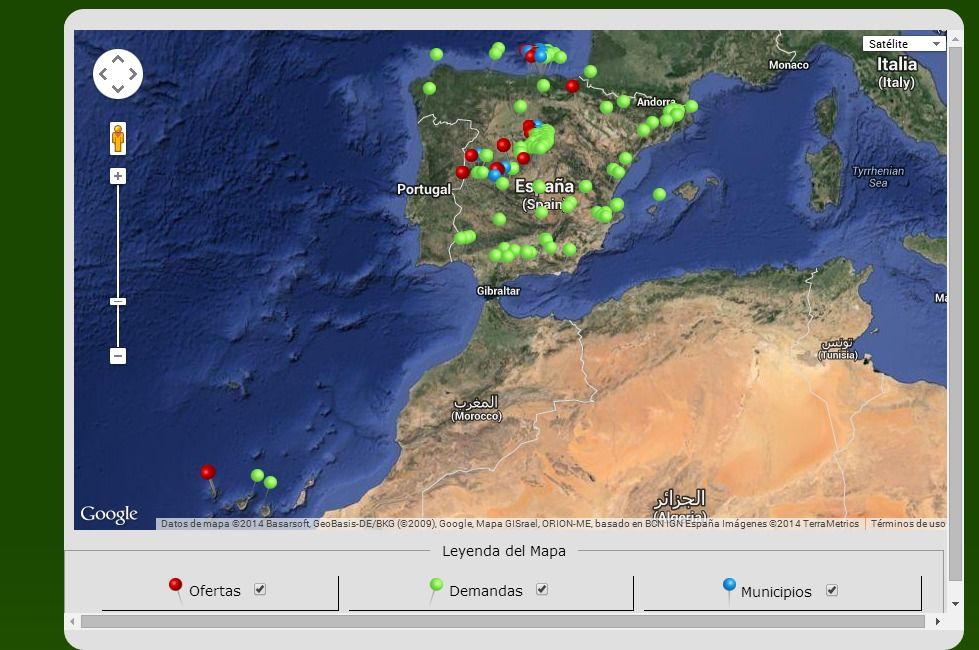
By April 2014, almost 30 Municipalities from eight different Spanish regions are part of TERRAE. They are working together to implement a method which combines training in organic agriculture, acces to land and “mentoring” for new microfarmers:
Start small to go far

- a) Training. Each participant enrolls in a 50 hours training course. The basic notions of ecological agriculture are put into practice in gardens for self-consumption. After 6 months, those willing to continue move to the next “proto-entrepeneurial” stage, which includes 110-150h training and the support of municipal advisers (DILAS). With this course, it begins the first year of internship under the supervision of TERRAE. Each proto-entrepreneur earns almost 400 €/month (cost included). In the second year, participants are requested to formalize their one-person enterprise and to register in the national social security service. Therefore the beneficiaries need to engage in a real professional process and are pushed to make official courses on organic agriculture as those proposed in conventional CAP programs (e.g. young and new farmers). This step-by-step method enables unemployed to get gradually involved in local agriculture, building new relationships with consumers in a close dance of agroecological literacy.
 b) Mentoring: Each project facilitates contacts between the very small starting up producers and local restaurants and retailers through TERRAE brand. It includes a “evolutionary” system of contracts between municipalities, unemployed people and local consumers. The different contracts are explained in Box 1 “From self-supply to self-employment”.

- c) Acces to land: TERRAE has implemented a land bank on the basis that landowners usually trust Local Councils more than unemployed and outsiders. These lands are offered to entrepreneurs when they have to leave the municipal gardens. The land bank1 has currently more than 1400 users, with 200 demands, most of them not yet met. There are largely more entrepreneurs on agroecology than land offers: this is one of the main challenges that Municipalities involved in TERRAE try to solve. The central element of the TERRAE approach is the role of the DILAS (local agroecological facilitators) usually a public advisers or elected body from the Local Municipalities. They are responsible for integrating plots in the landbank, looking for places for municipal gardens, raising training resources from regional institutions, and also interviewing and following unemployed, contacting and exploring potential interest from restaurants and local food retailers. Local municipal councilors decide the target group beneficiaries (whether people handled by social services, excluded, young unemployed, etc). They also specify subjects, food sovereignty and other criteria according to the characteristics of the territory (gardening, grassing, fruit trees, etc.) The main task of DILAS advisers in TERRAE adherent councils, is to define what they call Local Agroecological Policy. This LAP, instead of CAP (Common Agriculture Policy) exemplify the real local engagement of this method and the municipal networking.
Major lessons
TERRAE municipalities tackle the problem of unemployment and of plots abandoned by the decline of agriculture or by the failure urbanization process. With the project, those unemployed learn and get experience with organic gardening for self consumption. In a second stage the unemployed work to enlarge production and orientate it to local markets and direct sell (with the support of DILAS local adviser intermediation). In every case Municipalities offer answers to real social demands linking local actor and resources and social concerns.
This is a promising experience that solved in successive stages some of the real problems and challenges that face local municipalities and unemployed people, by enhancing organic agriculture sector.
Both DILAS and Municipalities have a central role in the process. The Municipalities sign the contract with restaurants and “nano-farmers” on practices as facilitators, they monitor the process of learning and ensure that all the partners respect the commitments.
Therefore Local Councils are involved in an innovative culture of monitoring self employment, and developing agroecology and food sovereignty through new networks at local level.
Currently these TERRAE Municipalities are working on the potential relation between urban agriculture and organic waste, so that entrepreneurs bring to consumers the products and keep back the organic wasted to be composted, often through feeding for self consumptions pigs or poultry. This circular economy approach and virtuous cycles allows benefits for all the stakeholders: permit to reduce local taxes or spending money on waste manage, reduce waste transport, guarantee cheaper organic fertilizers, and obviously reduce carbon footprint and feed with organic matter as the main carbon sink.
BOX1. From self-supply to self-employment. System of contracts developed by TERRAE
- TERRAE 1.1. Contract for self consumption. Participants receive 50 hours (aprox.) of training in agrecology. Each one is offered 50 square meters on individual gardens in Municipal managed land. The contract runs for 6 to 12 months and specifies collaborative conditions and the supervision of the DILAS adviser. In this first step the trainees are not allowed to sell their production.
- TERRAE 1.2 y 1.3 Once a participant gains enough agroecological experience, the local council with the support of DILAS advisers, establishes the second step. Each participant is provided with nearby 1000 square meters for gardening ?? and is trained on production for local selling in specific markets (TERRAE 1.2, contract for local markets), or if they are really prepared, they sign a contract with a local restaurant or retailer to provide baskets of seasonal vegetables for 2 to 12 months (TERRAE 1.3). The restaurant that signes that contract specifying price, weight and duration, receives the brand TERRAE Ecokm0, which means “local seasonal food supporting new opportunities for entrepreneurs”.
- TERRAE 2 and 3. After one year of these self employment labor practices, the beneficiaries must register in the social security service as self employed to continue with the TERRAE contract support and brand. When they reach certification in organic agriculture they enter the TERRAE 3 sage.
These contracts are signed by DILAS and a Local councilor, the holder of the restaurant and the nano-farmer.
Usamos cookies propias con finalidad funcional y cookies de terceros (tipo Analytics) para conocer hábitos de navegación y dar mejor servicio de información.ACEPTAR RECHAZAR
Si lo deseas, puedesconfigurar tus preferencias y leer más información sobre este tema. Política de Privacidad y Cookies
 In 2010 Red TERRAE (Network of AgroEcological Reserve Territories) was born as a partnership of different Spanish Municipalities, mainly rural. Since then, TERRAE has built on the previous experience, focusing on local connections with restaurants and retailers. It has developed more flexible contract conditions regarding time engagement, price and volume. The TERRAE method and brand emerge as a system of contracts between local Municipalities, restaurants or other consumers, as well as landowners and unemployed people in order to custody both the territory and the agro-landscapes by enhancing agricultural biodiversity and self-employment.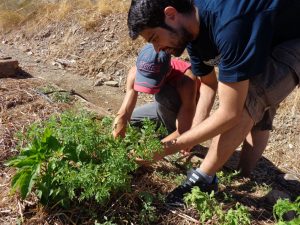
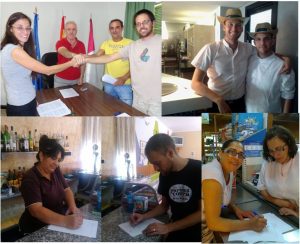 b) Mentoring: Each project facilitates contacts between the very small starting up producers and local restaurants and retailers through TERRAE brand. It includes a “evolutionary” system of contracts between municipalities, unemployed people and local consumers. The different contracts are explained in Box 1 “From self-supply to self-employment”.